How To Meal Prep for the Week: A No-Stress System
By:Author:no.Diet Editorial
Updated on:October 18, 2026
- Does Batch Cooking Actually Save You Time?
- How the Weekly Meal Prep Routine Breaks Down
- How Many Meals to Prep and How Often
- Why Prepping Beats Deciding Fresh Every Night
- Fitting Meal Prep Into a Genuinely Busy Week
- The Myth That Prepped Food Has to Be Boring
- What Changes How Well Meal Prep Works
- Common Mistakes That Derail a Prep Routine
- Making Weekly Meal Prep Easier With No.Diet
- Starting Your Own Weekly Prep Habit
Meal prepping for the week means cooking a batch of meals or components in advance so you're not deciding what to eat from scratch every single day. The direct answer: pick 2-3 meals, cook them once in bulk, portion them into containers, and eat from that stock for 3-5 days.
The mechanism is simple. Decisions made when you're hungry and rushed tend to default to whatever's fastest, and fast usually means less nutritious and more expensive. Prepping removes the decision from the hungry moment and moves it to a calmer one.
This guide covers whether meal prep actually works, how much to prepare and how often, why it beats cooking from scratch every night, and the mistakes that cause most people to stop after a week.
Does Batch Cooking Actually Save You Time?
Yes, because the time cost of cooking isn't just the cooking - it's the planning, the shopping trips, the chopping, and the cleanup, and prepping lets you do all of that once instead of five or seven times.
Here's the arithmetic. If cooking a single dinner from scratch takes 45 minutes including cleanup, five separate dinners cost 225 minutes across the week.
Batch cooking the same five portions in one session - say 90 minutes of cooking plus 20 minutes of cleanup - costs 110 minutes total, because the chopping, pan-heating and washing-up only happen once instead of five times.
That's a difference of 115 minutes a week, not because the food is different, but because repeated setup and teardown is where the time actually goes.
How the Weekly Meal Prep Routine Breaks Down
There are two separate jobs inside meal prep, and conflating them is where most routines fall apart.
Planning and Shopping
This is the part that happens before any cooking - deciding on 2-3 meals for the week and buying exactly what they need, no more. A tight list stops the fridge filling up with half-used ingredients that get thrown out later.
Cooking and Portioning
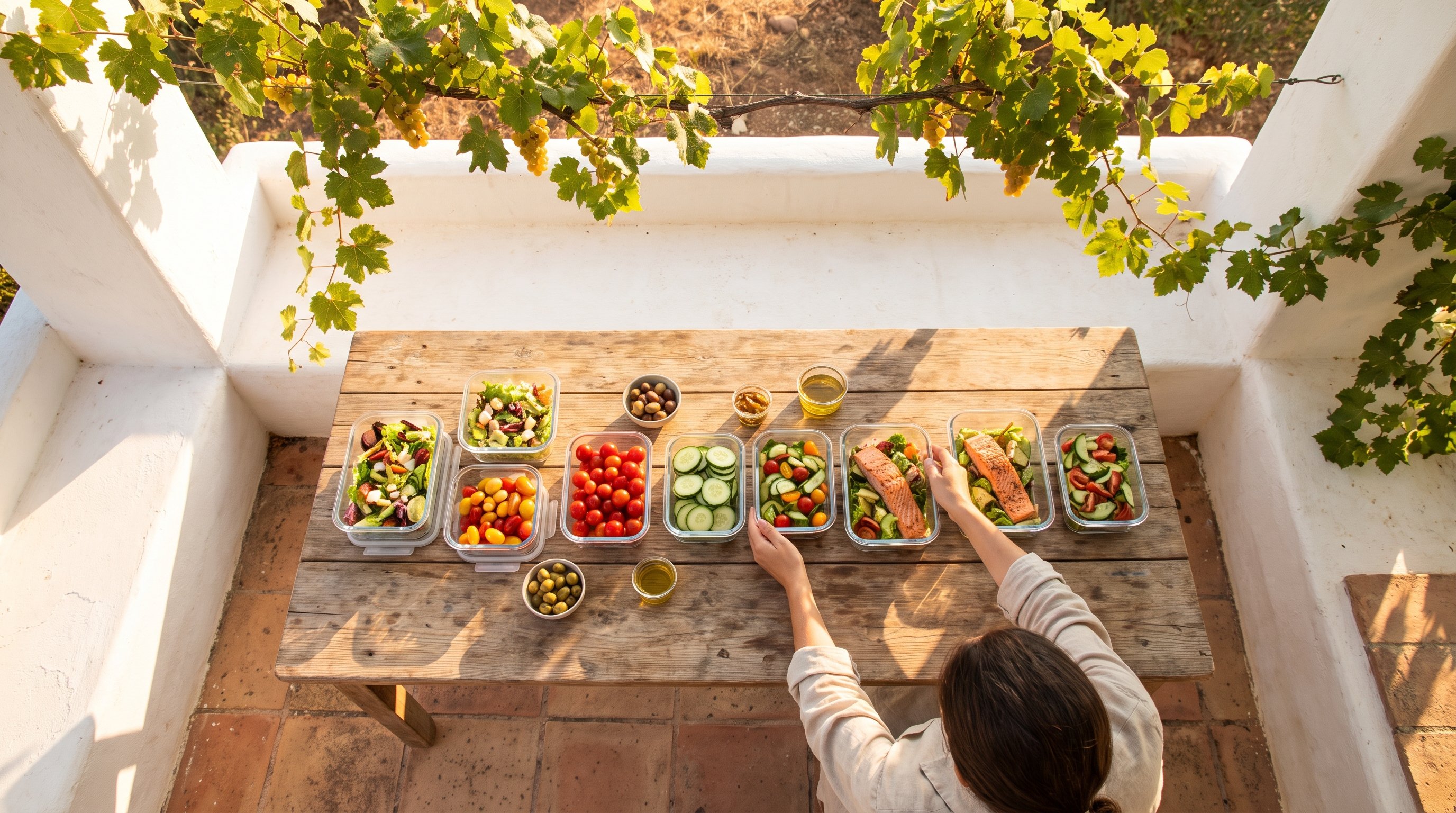
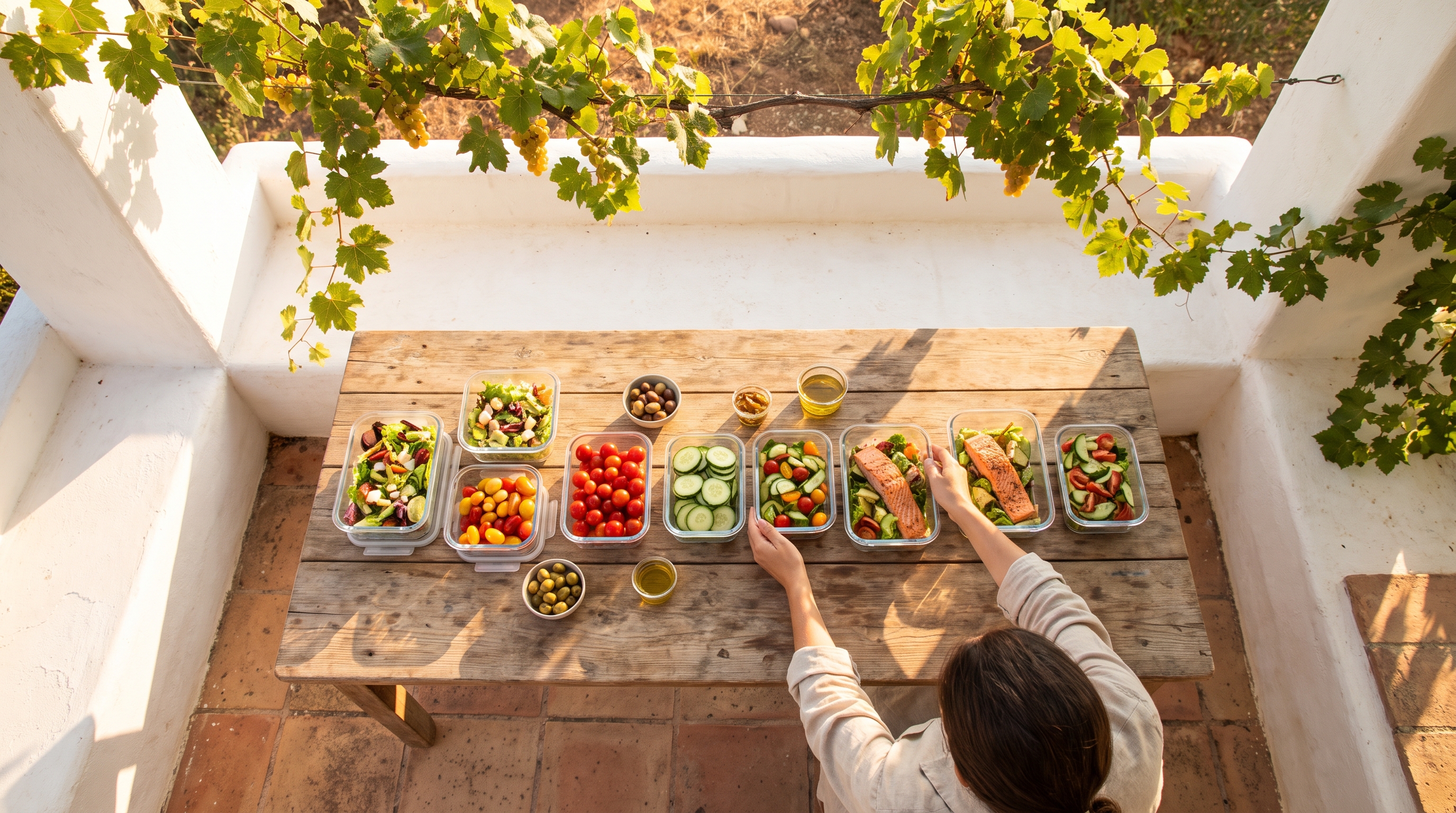
This is the batch session itself - cooking the base components (a grain, a protein, a vegetable mix) and splitting them into containers in portions you'll actually eat. Portioning right after cooking, while everything is still out, is what makes grabbing lunch on a Tuesday take 30 seconds instead of 10 minutes.
How Many Meals to Prep and How Often
Most people do better starting small rather than trying to prep all 21 meals in a week.
A Realistic Starting Point
Prepping lunches for five workdays, plus one or two dinner components, covers the meals where you're most likely to default to something expensive or rushed. Breakfasts and weekend meals can stay flexible until the routine feels automatic.

| Goal | Meals Prepped | Sessions Needed |
|---|---|---|
| Just starting out | 5 lunches | One session |
| Covering most weekdays | 5 lunches, 3 dinners | One or two sessions |
| Full week coverage | 10 lunches and dinners | Two sessions |
| Topping up mid-week | 3-4 extra portions | One short session |
Splitting into two shorter sessions - one mid-week top-up alongside the main Sunday batch - keeps food fresher than trying to cook everything at once and store it for seven days straight.
Why Prepping Beats Deciding Fresh Every Night
The alternative to meal prep isn't some disciplined version of cooking dinner from scratch every night - it's usually takeaway, a ready meal, or skipping the meal and snacking instead.
Cooking from scratch each evening depends on having energy and time left after work, which is exactly what's in short supply on a Wednesday.
Meal prep wins on adherence, not on being a better recipe - it just removes the moment where willpower is required, because the food is already there and already the easy option.
Fitting Meal Prep Into a Genuinely Busy Week
The routine only sticks if it fits around the week you actually have, not the week you wish you had.
Picking one fixed slot - Sunday afternoon, or Monday evening - and treating it like any other weekly appointment works better than prepping whenever there happens to be a spare hour, because spare hours rarely show up on their own.
A meal plan built around food you already like makes this far easier to repeat, since you're not relearning a new set of recipes every week - no.Diet's customized Mediterranean meal plans are built with exactly this kind of repeatable, no-decision-needed cooking in mind.
The Myth That Prepped Food Has to Be Boring
The idea that meal prep means eating the same bland chicken and rice five days running isn't true, and it's the main reason people assume prepping isn't for them.
The fix is prepping components, not finished meals - a cooked grain, a roasted vegetable mix, a protein - and combining them differently through the week with different sauces, spices or sides.
Five lunches from the same batch can taste like five different meals if the toppings and seasoning change, even though the base ingredients and the shopping list stayed identical.
What Changes How Well Meal Prep Works
Three factors decide whether a prep routine actually gets used or ends up as leftovers in the bin.
What Actually Moves the Needle
- Container variety - having enough containers in different sizes means portions match actual appetite instead of everything being the same size regardless of meal.
- A short, repeatable list - sticking to a handful of meals you rotate, rather than inventing something new every week, cuts both shopping time and decision fatigue.
- A fixed prep slot - treating the cooking session as a scheduled block rather than something squeezed in makes it far more likely to happen at all.
Common Mistakes That Derail a Prep Routine
Cooking Too Much Variety at Once
Trying to prep seven completely different meals turns one cooking session into seven small ones, which cancels out the time saving entirely. Stick to 2-3 bases and vary the toppings instead.
Skipping the Shopping List
Shopping without a list leads to buying ingredients that don't combine into full meals, which means more trips mid-week anyway. Write the list from the meals you've already chosen, not the other way round.

Storing Everything the Same Way
Some components freeze well and some turn soggy after two days in the fridge - treating them all the same is how good food ends up wasted. Store sauces and crunchy elements separately from the rest until serving.
Prepping Meals You Don't Actually Enjoy
Choosing meals because they're easy to batch, rather than because you want to eat them, is the fastest way to abandon the containers in the fridge. Pick food you'd choose anyway, then make it batchable.
No Backup Plan for a Missed Session
One skipped Sunday shouldn't mean the whole week falls apart - keeping a couple of freezer portions or simple pantry staples on hand covers the gap until the next prep session.
Making Weekly Meal Prep Easier With No.Diet
Knowing the theory is one thing - actually deciding what to cook, in what amounts, is the part that eats up most people's Sunday afternoon.
no.Diet handles that decision for you with customized Mediterranean meal plans, so the question shifts from "what should I cook" to "which of these do I feel like this week".
Alongside the meal plans, no.Diet keeps progress trackers, light exercises and lifestyle challenges in one place, so the food side of the week stops being the thing that derails everything else.
Healthy Eating Simplified
Build Better eating Habits
Starting Your Own Weekly Prep Habit
Pick one meal, pick one day, and cook just enough of it for the next three or four days - that's the whole starting point, not a full week of perfectly balanced containers.
Once that single meal is reliably prepped and eaten, adding a second one is far easier than trying to overhaul the whole week at once, and a tool like no.Diet can take the planning part off your plate while you build the habit.
FAQ
It can make it easier to stick to a reasonable portion and avoid last-minute takeaway, since the decision is already made before hunger sets in. It's not a guarantee on its own, because the meals still need to fit your overall intake for the week.
It's actually the opposite - one longer session replaces several shorter ones scattered across the week, which tends to save time overall. The upfront block can look like a big ask, but it's trading many small interruptions for one planned one.
Prepping for 3-4 days instead of a full week sidesteps most storage limits, since you're only holding a few days of food at once. A mid-week top-up session covers the rest without needing extra space.
Boredom with the same meals and underestimating the time needed are the two most common reasons people drop it. Rotating toppings and sauces on the same base ingredients, and using a plan like no.Diet's to vary the meals without extra planning effort, both help it last longer.
Share this post