Anti Inflammatory Foods: A Practical Guide
By:Author:no.Diet Editorial
Updated on:October 18, 2026
- Do Anti Inflammatory Foods Actually Work?
- Anti Inflammatory Eating vs Cutting Out Food Groups
- Why Swapping Foods Beats Banning Them Outright
- Who Benefits Most From Anti Inflammatory Eating
- Fitting Anti Inflammatory Swaps Into a Normal Week
- The Myth That One Food Can Switch Off Inflammation
- Building Anti Inflammatory Meals With No.Diet
- Making the Swap Stick Past the First Week
Anti inflammatory foods are simply whole foods - vegetables, fruit, oily fish, nuts, olive oil, whole grains - that replace the ultra-processed, sugar-heavy foods linked to ongoing low-grade inflammation in the body. No single food does this on its own; it's the overall pattern that matters.
The mechanism is straightforward substitution, not magic. Swap refined carbs and fried food for fibre, healthy fats and plant compounds often enough, and the inputs your body is working with change.
This guide covers what the evidence of mechanism actually supports, how an anti inflammatory way of eating compares to stricter diets, who it suits, and how to make it stick without turning dinner into a chore.
Do Anti Inflammatory Foods Actually Work?
The honest answer is: they work as part of a pattern, not as individual fixes. Inflammation is a normal bodily process, and chronic low-grade inflammation is influenced by many things - sleep, stress, activity, body composition and diet among them.
Foods described as anti inflammatory - olive oil, oily fish, leafy greens, berries, nuts, legumes - tend to be high in fibre, unsaturated fats and plant compounds, and low in the refined sugar and industrial trans fats found in many processed foods.
The arithmetic is simple: if a meal that used to be a white-bread sandwich and a packet of crisps becomes wholegrain bread, olive oil, vegetables and a tin of fish, you've swapped out refined carbs and added fibre and unsaturated fat, every single day that swap happens.
Do that most days and the overall pattern of what you eat shifts meaningfully, even though no one meal changes anything on its own.
Anti Inflammatory Eating vs Cutting Out Food Groups
The real decision most people face is this: build meals around anti inflammatory foods, or go further and eliminate whole food groups hoping for a bigger effect.

Here's how the two approaches actually compare on the things that matter day to day.
| Approach | Flexibility | Grocery Cost | Social Ease | Long-Term Fit |
|---|---|---|---|---|
| Anti inflammatory pattern | High, swaps not bans | Similar to usual shop | Easy to eat out | Simple to keep going |
| Strict elimination diet | Low, foods fully removed | Often higher, specialty items | Harder at gatherings | Frequently abandoned |
| Fad detox or cleanse | Very low, short-term rules | Spikes during the detox | Very hard socially | Rarely sustained |
| No changes at all | Total flexibility | No change | No friction | No dietary shift happens |
| Supplement-only route | High, no food changes | Added cost, no food savings | No social impact | Misses the food pattern entirely |
Why Swapping Foods Beats Banning Them Outright
Elimination diets ask you to give things up completely. Swapping asks you to choose differently, most of the time, which is a much smaller ask on any given day.
That matters because the pattern only pays off if you keep it going. A rule you break by Thursday does nothing for you; a swap you can repeat for months actually accumulates.
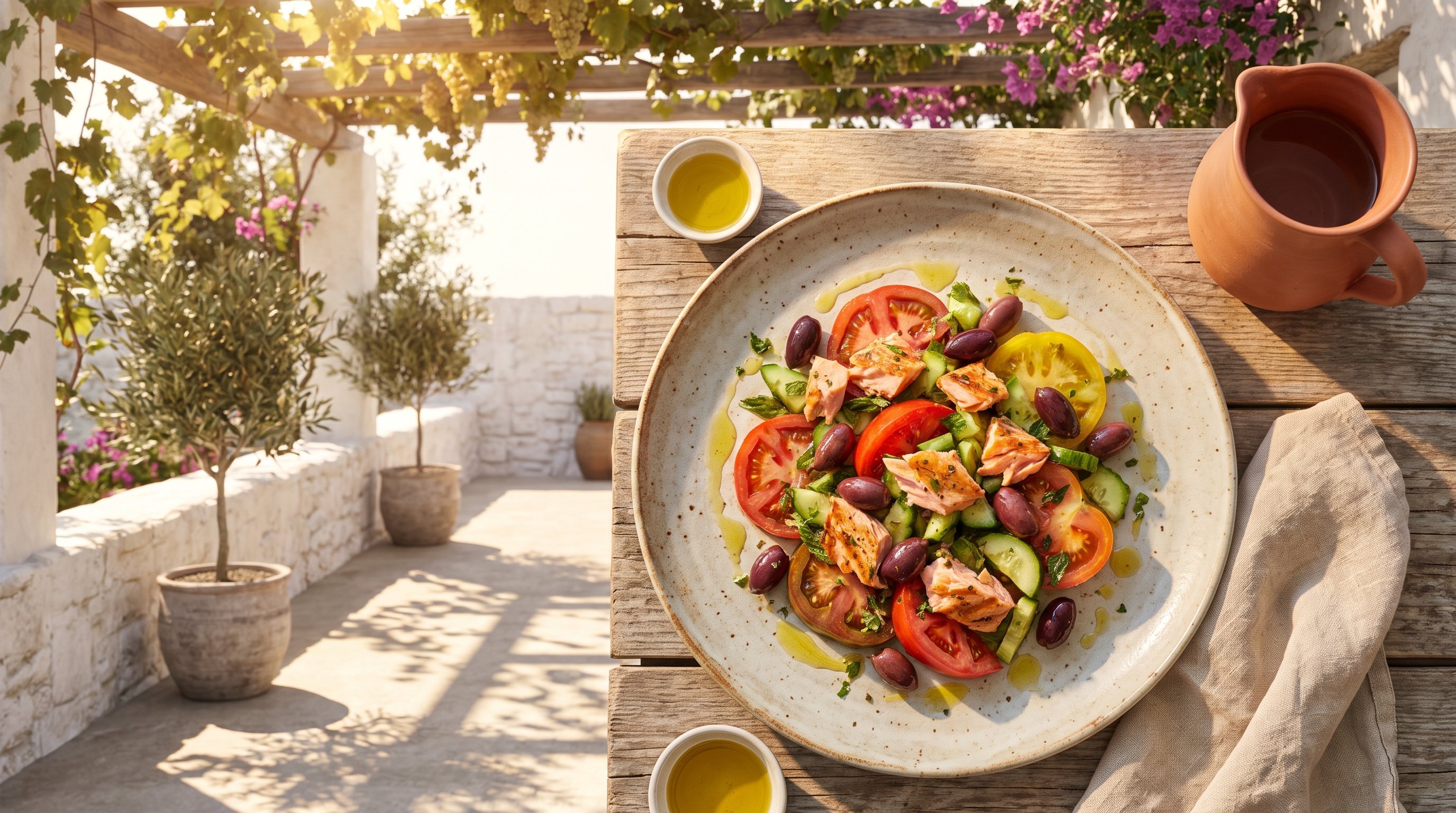
Think of it as two plates side by side: one built around olive oil, vegetables, whole grains and fish, one built around fried food, white bread and sugary drinks. The difference isn't one ingredient - it's that one plate is made up of swaps you can live with indefinitely, and the other asks for a level of restriction most people can't hold.
Who Benefits Most From Anti Inflammatory Eating
If You're Just Starting Out
Start with one swap at a time - olive oil instead of butter, or fish once a week instead of processed meat. Stacking small swaps is easier to sustain than overhauling every meal at once.
If You're Short on Time
Tinned fish, frozen vegetables and pre-washed greens are anti inflammatory foods too, and they take no more effort than their processed alternatives. Convenience and this way of eating aren't opposites.

If You're Managing a Busy Household
Cooking one base meal - a grain, vegetables, a protein, olive oil - and letting everyone add their own extras keeps things simple without cooking separate dishes. It also means the anti inflammatory swaps apply to the whole table, not just one plate.
If You're Doing This Later in Life
Fibre and unsaturated fats fit easily into meals that are already softer or easier to prepare, like soups, stews and cooked vegetables. There's no need for raw salads or anything hard to chew to get the benefit of the swap.
Fitting Anti Inflammatory Swaps Into a Normal Week
None of this requires a separate shopping list or a kitchen overhaul. It's the same meals most weeks, built with a few different ingredients.
A customized Mediterranean meal plan inside no.Diet already leans on these swaps - olive oil, vegetables, whole grains, fish and legumes - built around food you already like, so you're not reinventing dinner from scratch.
Having the plan, plus a tracker that keeps meals, steps and water in one place, takes the daily decision-making out of it, which is usually the part that wears people down.
The Myth That One Food Can Switch Off Inflammation
No single ingredient - turmeric, ginger, salmon, blueberries - can switch off inflammation on its own, and nothing you eat can target inflammation in one specific joint or area of the body.
That's not how digestion or circulation works: food gets broken down and used throughout the body, not routed to one spot.
The real answer is less exciting but more useful - a consistent pattern of whole foods over refined ones, kept up for months rather than days, is what the mechanism actually supports.
Building Anti Inflammatory Meals With No.Diet
Knowing which foods to lean on is one thing - building them into meals you'll actually cook again is another.
no.Diet puts the Mediterranean-style swaps into a plan you follow rather than one you have to design yourself, alongside light exercises, progress trackers and lifestyle challenges that keep the whole pattern going, not just the food part.
Healthy Eating Simplified
Build Better eating Habits
Making the Swap Stick Past the First Week
Pick one meal this week - lunch, dinner, whatever's easiest - and build it around olive oil, vegetables and a whole grain instead of the usual refined version.
Repeat that one swap daily before adding another, and the pattern that anti inflammatory eating depends on starts to form on its own, which is exactly what a tool like no.Diet is built to support over the long run.
FAQ
They can fit naturally into a lower-calorie pattern because fibre-rich whole foods tend to be more filling than refined, processed ones. The weight change comes from the overall calorie balance, not from any food's anti inflammatory properties directly.
No, there's no need for an all-or-nothing rule here. Swapping most meals, most of the time, is what the pattern actually depends on, not perfection.
Anti inflammatory foods cover a wide range - olive oil, nuts, legumes, whole grains, berries, tomatoes - so there's plenty of room to build a pattern around what you actually enjoy. Nobody needs to force down food they dislike for this to work.
Look at your week as a whole rather than grading each meal - if most of your plates lean on whole foods over processed ones, that's the pattern working. no.Diet's tracker is built for exactly this kind of weekly view, so you're not second-guessing every single bite.
Share this post