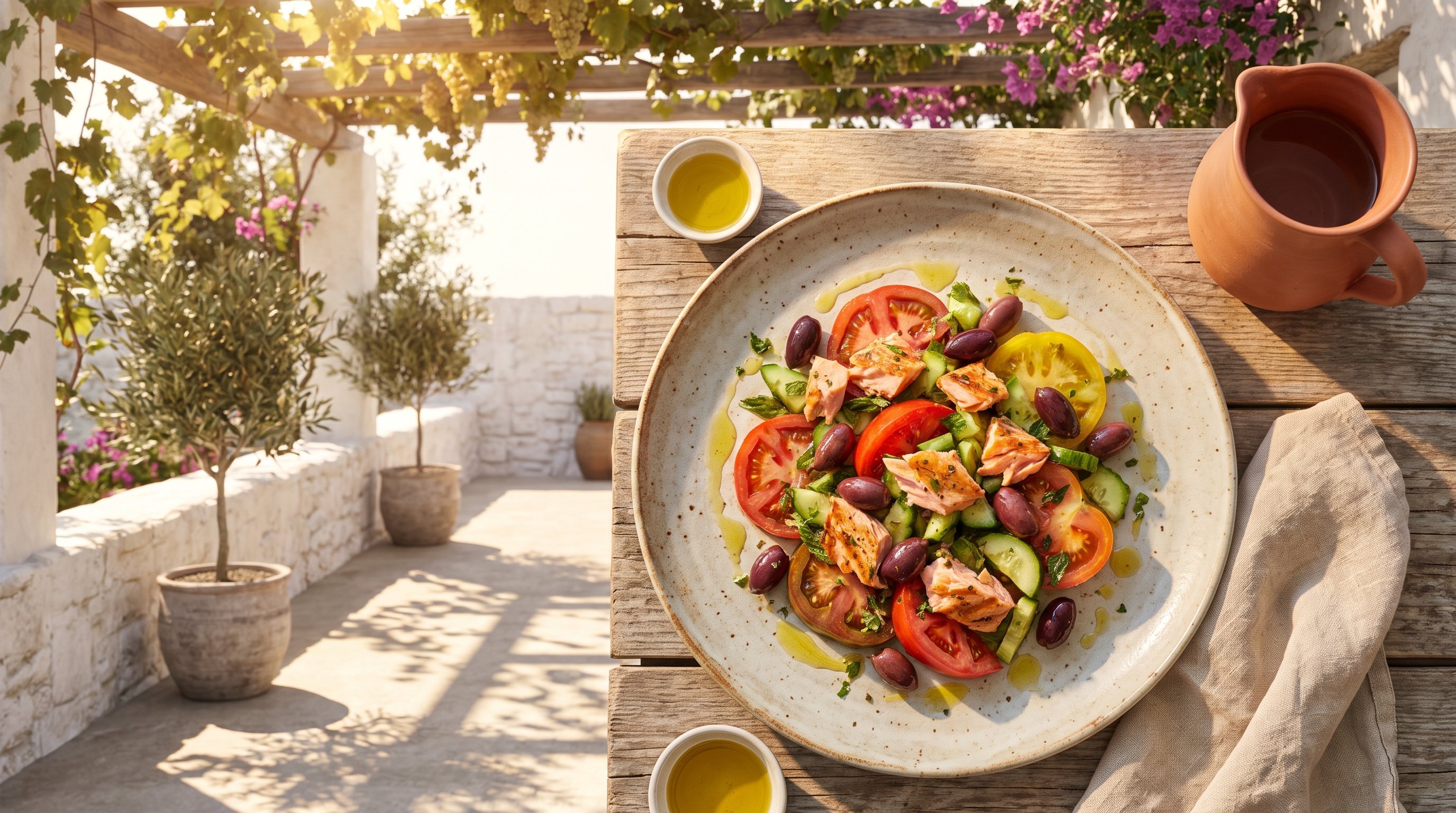
Easy Mediterranean Recipes: A Simple Way to Eat Better
By:Author:no.Diet Editorial
Updated on:October 18, 2026

- Do Easy Mediterranean Recipes Actually Help?
- What Makes These Recipes Work on a Plate
- How Often You Need to Cook This Way
- Why Simple Swaps Beat a Strict Meal Overhaul
- Making Mediterranean Recipes Fit a Real Weeknight
- The Myth That One Meal Changes Everything
- What Changes How Much These Recipes Deliver
- Mistakes That Make Mediterranean Cooking Harder Than Needed
- Simplifying Easy Mediterranean Recipes With No.Diet
- Keeping Easy Mediterranean Cooking Part of Your Week
Easy Mediterranean recipes work because they swap heavily processed ingredients for ones you can actually keep eating - olive oil instead of butter, beans instead of half the meat, vegetables that fill most of the plate.
The mechanism is simple substitution, not restriction. You are not cutting foods out so much as changing what sits at the centre of the meal, which makes the whole thing easier to repeat week after week.
This article covers whether these recipes actually help, how often to cook them, the mistakes that slow people down, and a realistic way to fold them into a normal week.
Do Easy Mediterranean Recipes Actually Help?
They help in a fairly unglamorous way: they make it easier to eat fewer refined carbs and more fibre-rich, whole-food meals without feeling like you are on a diet.
A lentil and vegetable stew fills you up on fewer calories than a creamy pasta bake, simply because vegetables and legumes take up more space on the plate for less energy.
That is the whole arithmetic - more volume, less density, same satisfaction, which makes a calorie deficit easier to hold without counting every bite.
None of this is magic and none of it happens overnight, but the mechanism holds up meal after meal, which is really all it needs to do.
What Makes These Recipes Work on a Plate
Two things do most of the work: what sits at the centre of the meal and what gets left out of the pan.
Vegetables and Legumes Take the Main Spot
When beans, chickpeas or a pile of roasted vegetables replace half the usual portion of meat or pasta, the meal gets bulkier without getting heavier in calories.
Olive Oil Replaces Processed Fats
Cooking with olive oil instead of butter or shop-bought sauces cuts out a lot of the hidden sugar and refined fat that creep into quick weeknight meals.
Put those two shifts together and you get a meal that is filling, familiar in flavour, and genuinely quick to put together on a weeknight.
How Often You Need to Cook This Way
There is no fixed rule, but most people find a handful of simple swaps across the week does more than one perfect meal ever could.
Start With a Few Meals a Week
Picking three or four dinners to make this way, and letting the rest of the week be whatever is easiest, is enough to shift the overall pattern.

The table below gives a simple spread you could copy without overhauling your whole week.
| Meal | How Often | Effort Level |
|---|---|---|
| Chickpea and vegetable stew | Once a week | Low, one pot |
| Grilled fish with greens | Once or twice a week | Low, one pan |
| Lentil soup | Once a week | Low, batch friendly |
| Bean and tomato pasta | Once a week | Low, quick swap |
| Roasted vegetable tray bake | Once a week | Minimal, oven does the work |
Why Simple Swaps Beat a Strict Meal Overhaul
Compare two approaches: rebuilding every meal from scratch around a strict plan, or swapping a handful of ingredients in the dinners you already cook.
The strict overhaul asks for more shopping, more new skills, and more willpower in the first two weeks - which is exactly when most people quit.
Swapping olive oil for butter, or beans for half the mince in a bolognese, asks for almost nothing new, which is why it tends to stick long after the stricter plan has been abandoned.
Adherence beats intensity every time, because a meal you will actually repeat does more for you than a meal you only manage once.
Making Mediterranean Recipes Fit a Real Weeknight
The honest barrier is not the ingredients, it is the decision fatigue of figuring out what to cook after a long day.
Having a short rotation of easy Mediterranean recipes you already know how to make removes that decision entirely - you just reach for one of the five or six you keep in rotation.
This is where a tailored Mediterranean meal plan inside no.Diet helps, because it builds that rotation around food you already like instead of asking you to start from a blank page every Sunday.
Pairing that with simple progress tracking means you are not guessing whether the swaps are actually adding up over the week.
The Myth That One Meal Changes Everything
A single Mediterranean dinner will not undo a week of processed food, and it will not target fat on any one part of the body - the body does not work that way.
Fat loss happens across the whole body based on overall energy balance, not based on which food or which meal you just ate.

What actually moves things is the pattern repeated over weeks - the same handful of swaps, made over and over, long after the novelty wears off.
That is a less exciting answer than a miracle ingredient, but it is the honest one and it is the one that keeps working.
What Changes How Much These Recipes Deliver
Three things decide whether easy Mediterranean recipes actually move the needle for you.
Factors That Matter Most
- How often you repeat them - one good meal a month does far less than three or four a week, simply because of total volume.
- What they replace - a swap only helps if it actually displaces something more processed, not if it just gets added on top.
- How easy they are to make again - a recipe that takes an hour of prep rarely survives a busy Tuesday, no matter how good it tastes.
Mistakes That Make Mediterranean Cooking Harder Than Needed
Trying to Cook Everything From Scratch
Making your own bread, sauces and stock on top of dinner is a lot to ask on a weeknight - tinned beans, jarred sauces and pre-washed greens still count.
Buying a Long List of Unfamiliar Ingredients
A pantry full of ingredients you only use once sits in the back of the cupboard - stick to a short rotating list you will actually use again.
Treating It As All or Nothing
Skipping the approach entirely because one dinner did not turn out Mediterranean is more damaging than just having a normal meal and trying again tomorrow.
Ignoring Portion Size
Olive oil and nuts are part of the pattern, but they are still calorie-dense, so a heavier hand with them can quietly cancel out the benefit of the vegetables.
Simplifying Easy Mediterranean Recipes With No.Diet
Most of the friction with Mediterranean cooking is not the food, it is the planning - what to buy, what to cook, and whether it is actually working.
no.Diet handles that by building a customized Mediterranean meal plan around food you already like, pairing it with light exercises and progress trackers so you can see the pattern add up over time rather than guessing.
The lifestyle challenges and exclusive content inside the app are there to keep the habit going past the first few weeks, which is usually where good intentions quietly stall.

Healthy Eating Simplified
Build Better eating Habits
Keeping Easy Mediterranean Cooking Part of Your Week
Pick three dinners you already know how to make, swap one processed ingredient in each for something simpler, and repeat that for a few weeks before judging the result.
no.Diet can take that first decision off your plate by handing you a rotation built around food you already enjoy, so the habit has fewer chances to fall apart.
FAQ
They help indirectly by making meals more filling for fewer calories, which makes a deficit easier to hold over time. No single recipe causes weight loss on its own.
No - the approach is built on substitution, not elimination, so you are not cutting out entire food groups. Most meals still include carbs, fats and plenty of flavour.
It does not need to be - tinned beans, frozen vegetables and jarred sauces still fit the pattern. no.Diet's meal plans are built with that kind of realistic, low-effort cooking in mind.
That is the point where most people drift back to old habits, usually because the rotation felt like effort rather than routine. Keeping the same few easy meals on repeat, rather than chasing new recipes constantly, tends to carry people past that drop-off point.
Share this post