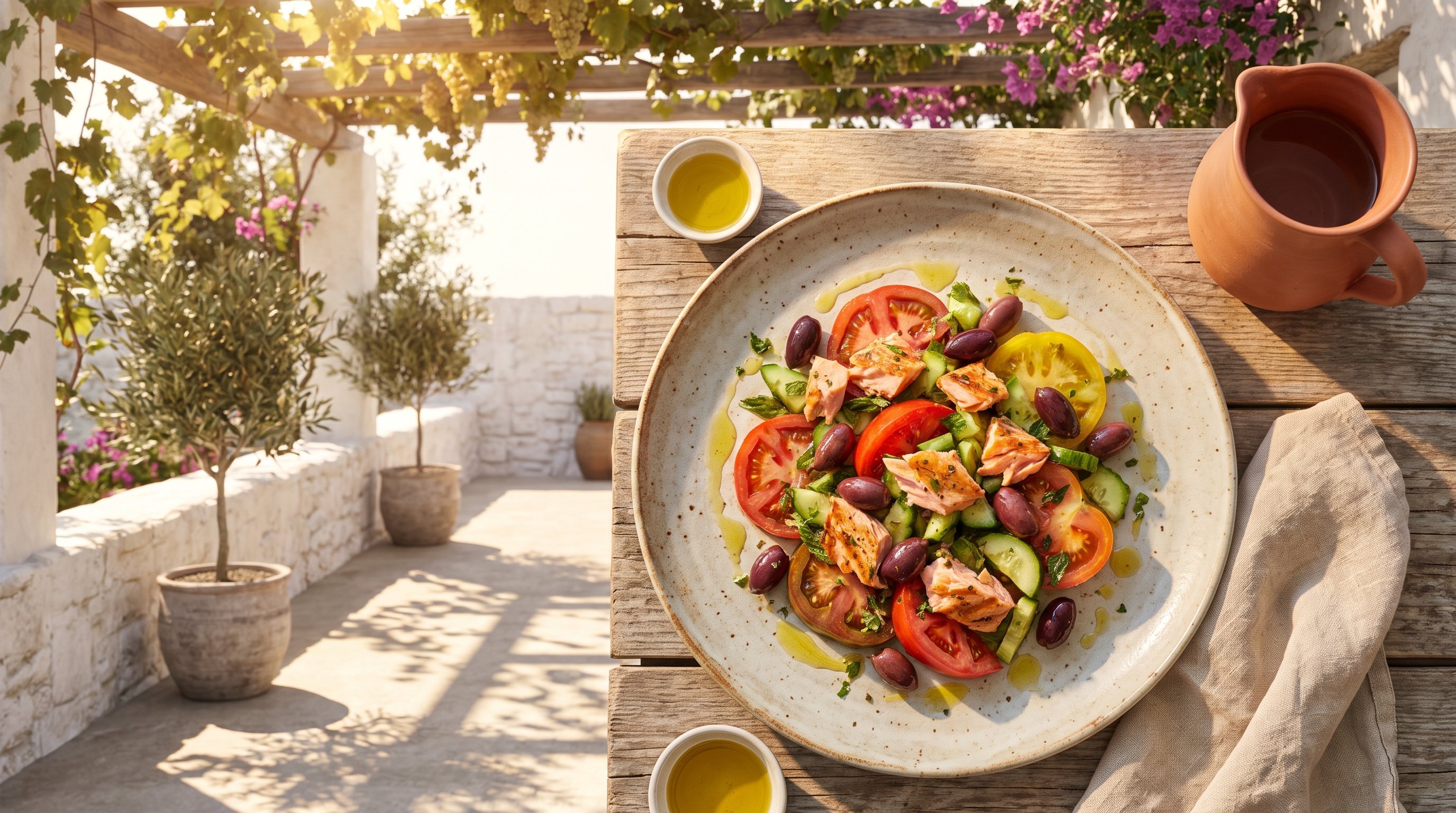
Mediterranean Diet Food List: What to Buy and Eat Weekly
By:Author:no.Diet Editorial
Updated on:October 18, 2026
- Building Your Mediterranean Diet Food List Step by Step
- How Much of Each Food Group to Eat
- Fitting the Food List Into a Normal Shopping Trip
- A Four-Week Way to Ease Into the List
- When the Mediterranean Food List Starts Feeling Normal
- Mistakes That Stall a Mediterranean Shopping List
- Turning the Food List Into Meals With No.Diet
- Making the Mediterranean List Part of Your Week
A Mediterranean diet food list centres on vegetables, fruit, whole grains, beans, nuts, olive oil, fish and a smaller amount of dairy and poultry, with red meat and sweets kept occasional rather than daily.
None of these foods work by magic. The pattern helps because it's mostly plants and healthy fats, which tend to be lower in calories for the same volume of food, so it's easier to eat well without feeling short-changed.
This guide walks through what to actually put in the trolley, how often to eat each category, a simple four-week way to ease into it, and the mistakes that usually stall people before it becomes a habit.
Building Your Mediterranean Diet Food List Step by Step
Rather than trying to overhaul every meal at once, build the list in layers so it stays manageable.

How to Build the List
- Start with vegetables - pick two or three you already like and buy them every week before adding new ones
- Add a whole grain - swap white rice or white bread for a wholegrain version you'll actually finish
- Pick two fish options - choose a tinned option and a fresh option so there's always a quick choice available
- Stock a bean or lentil - tinned chickpeas, lentils or beans are cheap, filling and need no prep
- Buy olive oil as the default fat - use it for cooking and dressing instead of butter or shop-bought sauces
- Keep nuts and fruit visible - a bowl on the counter beats a bag at the back of the cupboard
- Treat red meat and sweets as extras - not banned, just not the default choice most days
Once those seven categories are sitting in the kitchen, most meals assemble themselves without much thought.
How Much of Each Food Group to Eat
A Rough Weekly Guide
There's no single correct number here, but a general shape makes shopping and planning easier.
| Food Group | How Often |
|---|---|
| Vegetables and fruit | Most meals, daily |
| Whole grains and legumes | Daily, most meals |
| Fish and seafood | Two or more times a week |
| Poultry, eggs, dairy | A few times a week |
| Red meat and sweets | Occasionally, not daily |
Think of it as a shape for the week rather than a rulebook for every single plate.
Fitting the Food List Into a Normal Shopping Trip
A long ingredient list is only useful if it survives contact with a tired Tuesday shop and a fridge that's already half full.
The trick is repetition, not variety. Buying the same six or seven Mediterranean staples every week, rather than chasing new recipes constantly, keeps the shop quick and the kitchen predictable.

This is where a tailored meal plan built around food you already like earns its keep, since it turns a general food list into an actual weekly shop and a set of meals you'll cook.
no.Diet builds that plan around Mediterranean staples, so the list above stops being theory and starts being what's actually in the fridge.
A Four-Week Way to Ease Into the List
Rather than switching every meal overnight, phase the food list in over a month.
| Stage | Focus |
|---|---|
| Week 1 | Swap cooking fat for olive oil |
| Week 2 | Add fish twice and a daily vegetable |
| Week 3 | Switch grains to wholegrain versions |
| Week 4 | Scale back red meat and sweets |
The order matters more than the speed. Getting the fat and the vegetables right first makes every later swap easier.
When the Mediterranean Food List Starts Feeling Normal
Early on, the shopping list feels like homework. You're reading labels, checking what counts as wholegrain, working out which tinned fish you actually like.
That phase usually eases once the same staples keep reappearing in the trolley without a second thought. This is also roughly when people are most likely to quit, before the list has become automatic.
There's no fixed point where it suddenly clicks. It tends to be gradual, meal by meal, rather than one obvious turning point.
Mistakes That Stall a Mediterranean Shopping List
Buying Everything at Once
A trolley full of unfamiliar ingredients in week one usually means half of it goes to waste. Pick two or three new items a week instead of overhauling the whole shop.
Treating Olive Oil As Optional
Skipping the fat swap and keeping butter or processed sauces undercuts the whole pattern. Make olive oil the default and the rest of the list falls into place faster.
Ignoring Portion Size Entirely
Nuts and olive oil are healthy fats, but they're still calorie-dense, and eating them without any sense of amount can cancel out the benefit of the swap. A handful of nuts, not a bowlful, is the general shape to aim for.
Chasing Recipes Instead of Staples
Hunting for a new Mediterranean recipe every night is exhausting and rarely lasts. Repeating a handful of simple combinations is what actually keeps the list alive week to week.
Turning the Food List Into Meals With No.Diet
A food list tells you what to buy. It doesn't tell you what to cook on a Wednesday when the fridge is half empty and the day's already gone sideways.
no.Diet turns the Mediterranean staples from this list into a customized meal plan built around food you already like, so the shopping and the cooking stop being two separate problems.
Alongside the meal plan, it keeps light exercises, progress trackers and lifestyle challenges in one place, so the food list isn't the only thing you're trying to hold together.
Healthy Eating Simplified
Build Better eating Habits
Making the Mediterranean List Part of Your Week
The food list only does anything once it's actually in the kitchen, not saved in a notes app. Pick one swap from this list, make it this week, and let the next one wait until the first feels normal.
If turning the list into meals feels like the harder part, no.Diet handles that side, turning the ingredients above into a plan you can actually follow.
FAQ
No, starting with two or three swaps, like olive oil and more vegetables, still moves the overall pattern in the right direction. The full list is a target to grow into, not a minimum requirement.
Tinned beans, lentils and frozen vegetables keep costs down, and buying the same staples weekly usually cuts waste compared with constantly trying new ingredients. Fresh fish can push the price up, so tinned options are a reasonable substitute most weeks.
Beans, lentils, nuts and olive oil still cover most of what makes the pattern work, so fish isn't essential to get value from the list. A couple of eggs or a small portion of poultry can fill the same gap.
Treat it as a shopping habit rather than a strict rulebook, and let red meat or sweets stay in the picture occasionally instead of banning them outright. no.Diet's meal plans are built around this same flexible approach, so sticking with it doesn't depend on willpower alone.
Share this post