Morning Stretches: A Simple Routine to Start Your Day
By:Author:no.Diet Editorial
Updated on:October 18, 2026

- Do Morning Stretches Actually Loosen You Up?
- How Morning Stretches Actually Work on Your Body
- How Many Minutes of Stretching You Actually Need
- Why Stretching Beats Skipping Straight to Exercise
- Fitting Morning Stretches Around a Full Schedule
- The Myth That Stretching Burns Fat or Targets One Area
- What Changes How Useful Your Morning Stretch Is
- Mistakes That Make Morning Stretching Less Effective
- Pairing Morning Stretches With No.Diet's Daily Habits
- Making a Morning Stretch Routine Stick Long Term
Morning stretches loosen stiff joints and wake up muscles that have been still for hours, and they take less time than making coffee.
Overnight, you barely move, so fluid pools in joints and muscles shorten slightly. A few minutes of stretching restores a normal range of motion and gets blood moving before you ask your body to do anything harder.
This guide covers what stretching actually changes, how often to do it, a routine you can copy, and the mistakes that quietly make a morning stretch habit fall apart.
Do Morning Stretches Actually Loosen You Up?
Yes, and the mechanism is simple: stretching a muscle lengthens it gradually, which reduces the tightness you feel after hours of lying still.
Hold a position for a short period and the muscle fibres relax further than they would from movement alone. That's why a stretch held for 20 to 30 seconds feels different from a quick bounce.
Five minutes of stretching is a quick reset before you start moving. It will not replace a workout or undo a day spent sitting, but the loosening effect is real.
How Morning Stretches Actually Work on Your Body
There are two separate things happening when you stretch first thing, and understanding both helps explain why the routine matters more than any single move.
Muscles Lengthen Gradually, Not Instantly
A muscle held in a stretched position slowly releases tension over seconds, which is why static holds work better in the morning than fast, bouncy movements.

Blood Flow Increases Before You Even Stand Up
Gentle movement raises circulation to the muscles you're about to use, so joints feel less stiff by the time you're up and walking around.
Together, these two effects are why a short stretching routine feels different from just rolling out of bed and getting moving straight away.
How Many Minutes of Stretching You Actually Need
A Routine You Can Follow Today
Five to ten minutes covers the major areas that stiffen overnight: neck, shoulders, back, hips and hamstrings.
| Area | Move | Time |
|---|---|---|
| Neck and shoulders | Slow neck rolls | 30 seconds |
| Upper back | Seated spinal twist | 30 seconds per side |
| Hips | Standing hip circles | 30 seconds per side |
| Hamstrings | Forward fold, knees soft | 30 seconds |
| Calves | Wall calf stretch | 30 seconds per side |
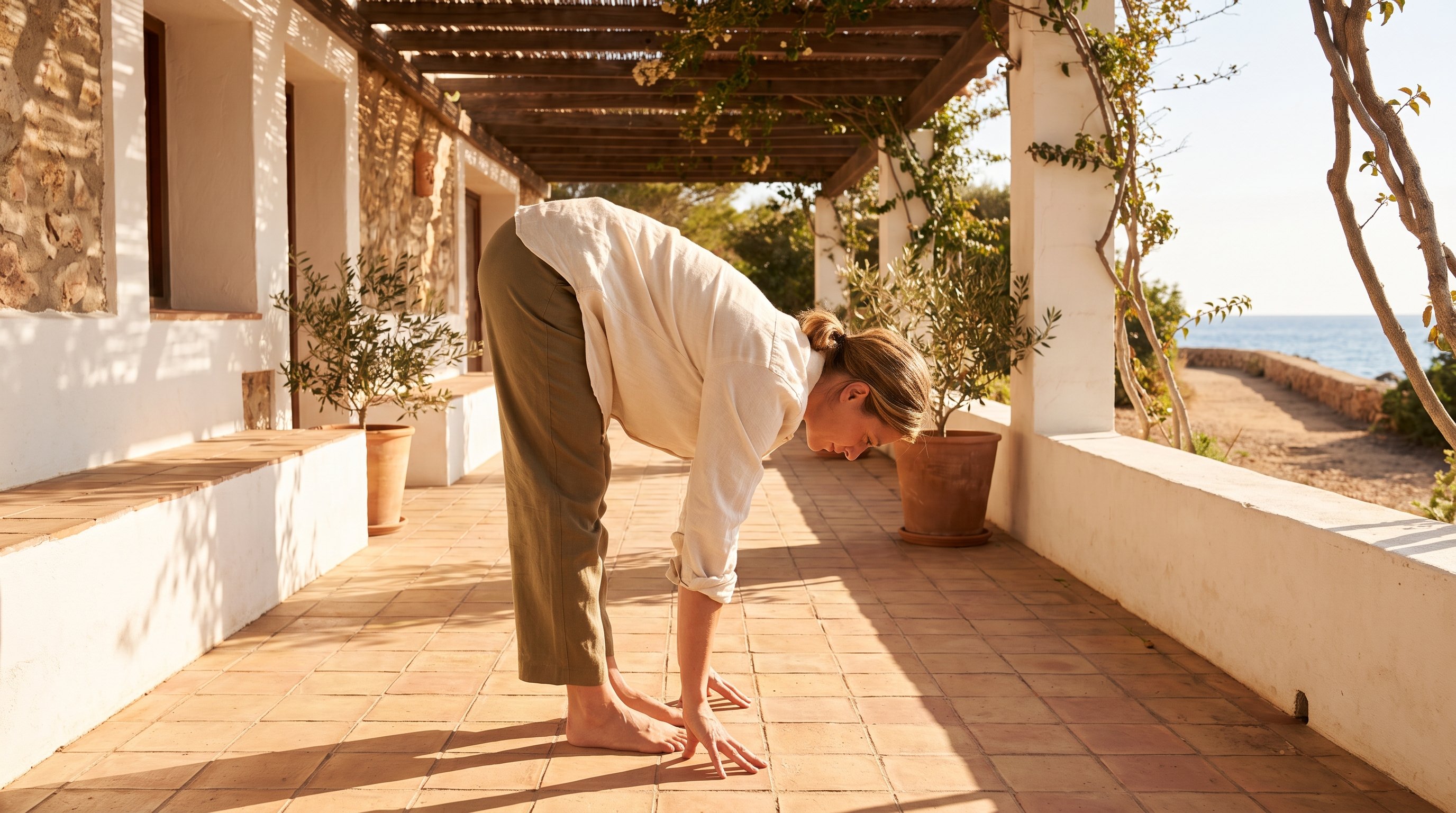
Run through the table once and you're at about five minutes, twice and you're closer to ten. Either version fits before breakfast without cutting into the rest of the morning.
Why Stretching Beats Skipping Straight to Exercise
The real choice most mornings isn't between stretching and a full workout, it's between stretching and nothing at all.
A cold start straight into a brisk walk or a workout asks stiff muscles to do more than they're ready for, which is less comfortable and easier to quit on.
Stretching first is the easier route because it needs no equipment, no change of clothes and no real exertion, so there's nothing stopping you from doing it daily. Easier to repeat beats harder to sustain almost every time.
Fitting Morning Stretches Around a Full Schedule
Mornings are usually the most crowded part of the day, so stretching has to slot in without asking for extra time you don't have.
Doing it bedside before you even check your phone, or beside the kettle while water boils, removes the need to carve out a separate block.
This is where a bit of structure helps. no.Diet's light exercises and progress tracker can sit alongside a stretching habit, giving you one place to log the small things you did before the day gets busy.
The Myth That Stretching Burns Fat or Targets One Area
Stretching does not burn fat and it cannot target one part of the body for change. The body doesn't work that way.
Fat loss happens across the whole body based on overall energy balance, not on which muscle you stretched that morning. Stretching your hips does nothing specific to the fat around your hips.
What stretching actually gives you is looser muscles, a wider range of motion and a calmer start to the day. That's a real and useful outcome, it's just a different one from the promise some people chase.
What Changes How Useful Your Morning Stretch Is
Not every stretching routine delivers the same payoff. Three things decide whether yours actually helps.
What Changes the Result
- Consistency - a routine done most days beats a longer one done occasionally
- Holding long enough - rushing through a stretch in 5 seconds gives the muscle no time to release
- Covering the right areas - neck, hips and hamstrings matter more than one-off stretches for a sore spot
Mistakes That Make Morning Stretching Less Effective
Bouncing Instead of Holding
Fast, bouncy movement doesn't give the muscle time to lengthen, so hold each stretch still instead.
Stretching Cold Into Pain
Pushing into sharp discomfort first thing can strain a stiff muscle, so ease in gently and stop at mild tension.
Only Doing It When You Remember
An occasional stretch barely registers, so anchor it to something you already do daily, like brushing your teeth or boiling the kettle.
Skipping the Areas That Need It Most
Hips and hamstrings stiffen the most overnight, so don't let a quick neck roll stand in for the whole routine.
Pairing Morning Stretches With No.Diet's Daily Habits
A stretching habit works better when it's not the only thing you're trying to remember each morning.
no.Diet brings light exercises, a progress tracker and lifestyle challenges into one place, so a short stretch can sit next to a glass of water and a quick log instead of getting lost in a busy morning.
Pairing a small physical habit with a customized Mediterranean meal plan through no.Diet means the morning routine and the eating pattern reinforce each other, rather than competing for attention.

Healthy Eating Simplified
Build Better eating Habits
Making a Morning Stretch Routine Stick Long Term
Pick three or four stretches from the table above and attach them to something you already do every morning, like waiting for the kettle or sitting up in bed.
Consistency is unglamorous and it wins anyway. Five minutes done daily will do more for how you feel than a longer session done once a week, and pairing it with a habit tracker makes it easier to notice you're actually keeping it up.
FAQ
Not directly, since stretching burns very little energy compared with walking or light exercise. It's better understood as a way to loosen up and start the day moving, alongside a wider habit like a tailored meal plan through no.Diet.
Stretching after exercise is useful too, but morning stretching serves a different purpose: loosening a body that's been still for hours. Doing both isn't necessary, pick whichever one you'll actually keep doing.
Two or three stretches held for 20 seconds each takes under two minutes, which fits even a tight schedule. Attaching it to an existing habit, like waiting for the kettle, removes the need to find extra time.
Usually because they treat it as a separate task rather than attaching it to something automatic, so it gets forgotten once life gets busy. Logging it alongside other small habits, the way a tracker does, makes the drop-off easier to catch before it sticks.
Share this post